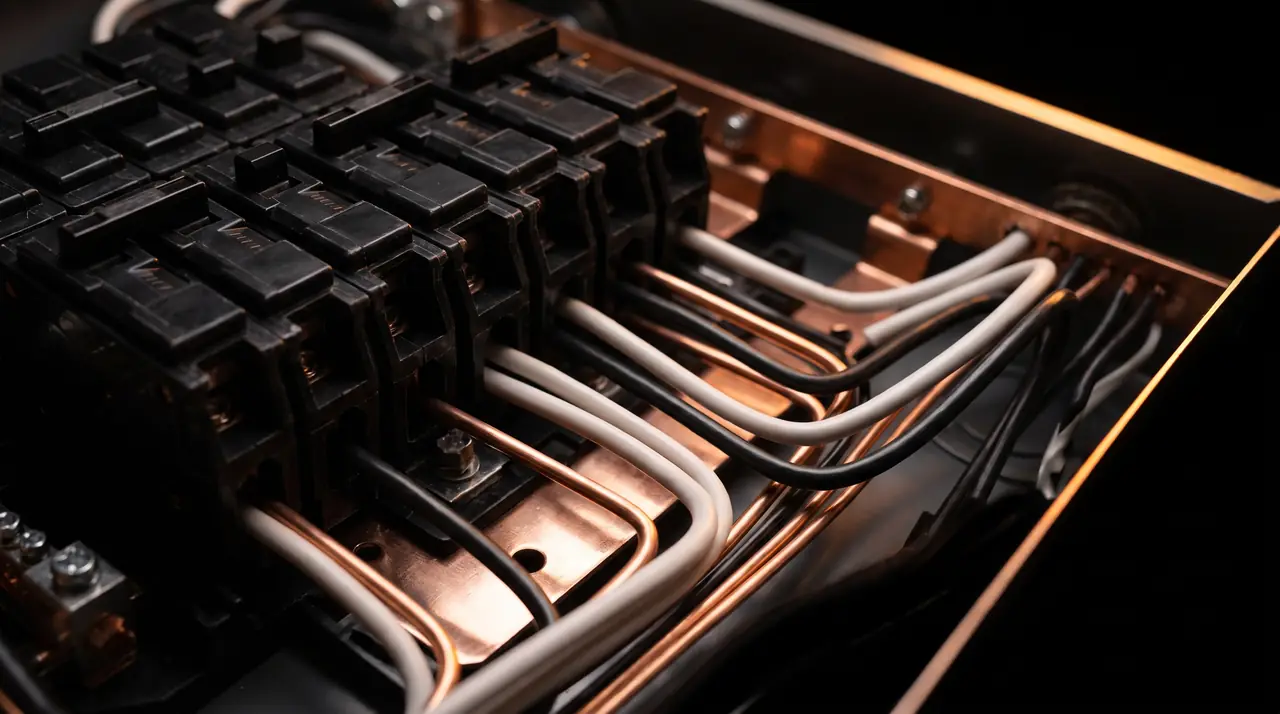
GFCI: protection for people
A ground fault circuit interrupter compares current leaving and returning on a circuit. If some current is leaking — for example through a person to ground — it trips in a fraction of a second. You'll find GFCI protection near water: bathrooms, kitchen counters near sinks, outdoors, garages and unfinished basements.
AFCI: protection against fire
An arc fault circuit interrupter watches for the electrical signature of arcing — a damaged cord, a nail through a cable, a loose connection — and trips before it can start a fire. Current codes require AFCI protection on most receptacle circuits in new dwelling wiring.
Why they trip
- GFCI: moisture in an outdoor receptacle, a faulty appliance, or several devices downstream adding up small leakages.
- AFCI: a damaged cord, a loose connection, some older motors and power tools, or a genuine wiring fault.
Nuisance tripping is usually telling you something. Replacing the device with a regular one isn't a fix — finding the cause is. See troubleshooting & repairs.
Do I need to add them to an older home?
Existing wiring generally isn't required to be updated unless it's altered. When we upgrade a panel or extend circuits, the affected circuits are brought up to current requirements.
Quick questions
Can one breaker do both?
Yes — dual-function breakers provide both GFCI and AFCI protection and are common in new panels.
Why did my GFCI trip after rain?
Moisture in an outdoor receptacle or exterior fixture is the usual cause. Weather-resistant in-use covers help.
Is it safe to keep resetting a breaker that trips?
Not repeatedly. Repeated tripping means there's a cause to find.